 Skip-the-line available
 Best Time and Light for Photographing the Prague Astronomical Clock
Morning light on the clock face, the magic hour from the tower platform, and night photography of the illuminated dial — when each window opens.
The Prague Astronomical Clock is one of the most-photographed monuments in Europe — and one of the trickier ones to photograph well. The clock face is on a south-facing wall, the square in front draws dense crowds, and the most-shared travel photos are nearly identical from the same angle. This guide is about the windows where the light, the crowds and the angle actually align — for both the clock face and the panorama from the Old Town Hall Tower above it.
Morning light on the clock face
The clock is on the south wall of the Old Town Hall, facing onto Old Town Square. Morning light from the south-east catches the dial cleanly from about 09:30 to 11:30 in summer, 10:00 to 12:00 in winter. The painted calendar dial below the clock face and the gilded astrolabe colours are at their richest in this morning window — the deep blues, the gold of the sun ring, the red of the calendar dial all read clearly without harsh shadows. Avoid noon to 14:00 — the sun is directly above the south wall and the dial falls into self-shadow under the upper window.
The 09:00 and 10:00 Apostles parades happen in this best-light window AND with the smallest crowds. This combination — soft morning light, manageable crowd, a clear sightline to the figures — is the single best combination for clock-face photography. Stand 30 metres back along Železná Street for the wide angle including the tower spires; stand within 10 metres of the tower base for figure close-ups; arrive 5–8 minutes before the hour to claim your spot.
Golden hour from the tower platform
Climb the Old Town Hall Tower (above the clock, separate ticket) 60–90 minutes before sunset. The 137-step climb or lift takes you to a viewing platform at about 56 metres, with a 360° view. The south-west angle in late-afternoon light catches Prague Castle on the opposite ridge in warm gold, with Týn Cathedral's twin spires in the foreground. This is the single best panoramic photograph from the Old Town Square area.
The platform stays open until sunset and beyond in summer (typically until 21:00 or 22:00). Plan to be on the platform 30 minutes before official sunset, stay through the colour change, and you have about 45–60 minutes of usable light from the magic-hour window through to civil twilight. Tripods are generally tolerated on the platform; mobile photography with computational night-mode works increasingly well in the post-sunset blue hour.
Night photography of the illuminated dial
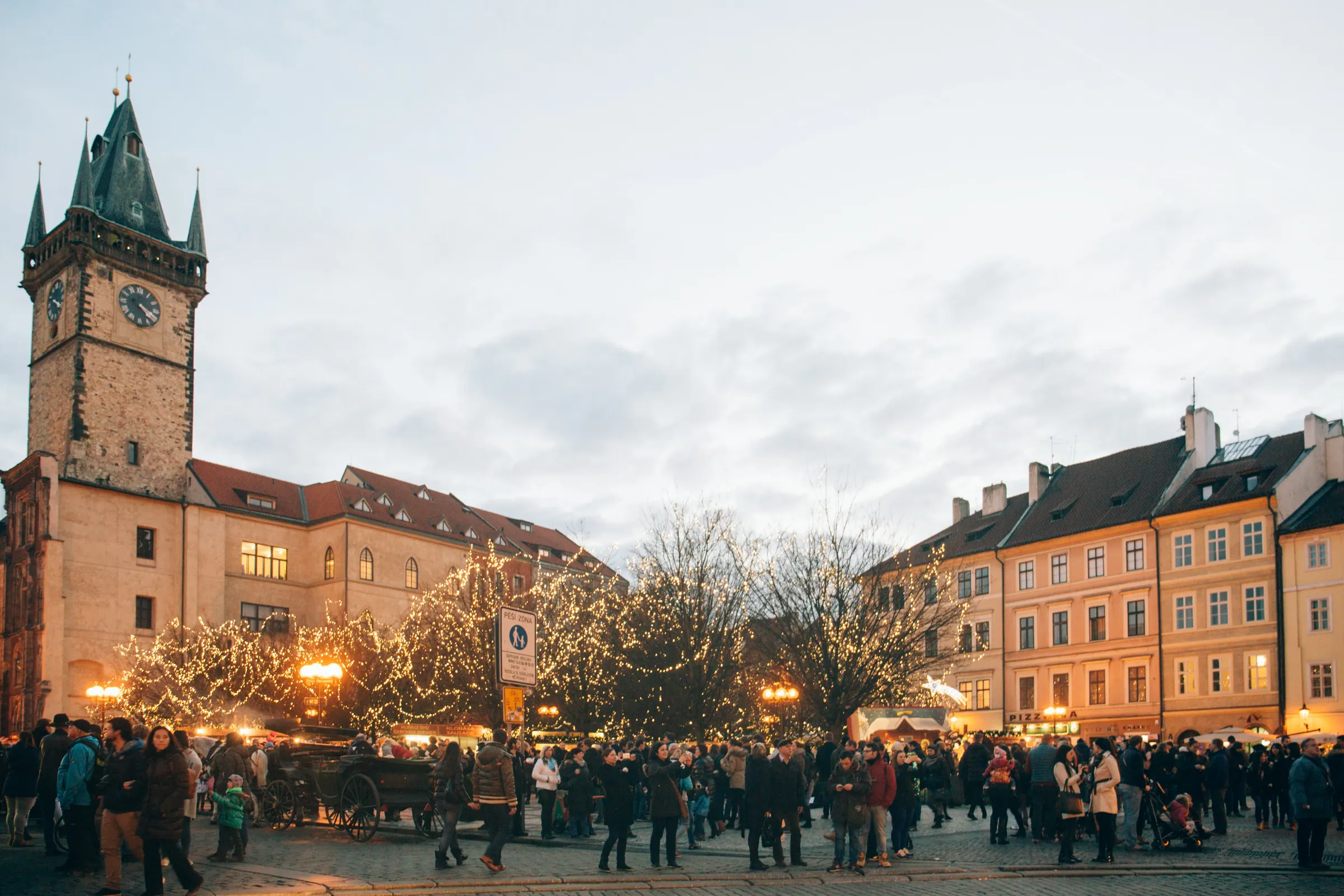
The clock face is illuminated from below after sunset, with warm yellow tungsten light that reads dramatically against the dark south wall. The 21:00 and 22:00 Apostles parades after dark have the smallest crowds of any hourly parade in the day — typically 50–100 people compared with the noon crowd of 1,500. The illuminated dial reads beautifully on camera; the figures during the parade are visible but darker than in daylight.
Best position for night shots: 30–40 metres back along Železná Street, with a steady hand or a small tripod. The clock face reads well at ISO 1600–3200 with a 1/30s shutter on most mobile cameras' night mode. The combination of illuminated clock, dark square and a thinner crowd makes night photography paradoxically easier than midday photography. The Old Town Hall's exterior architecture also reads more dramatically at night.
What to avoid
Avoid midday in summer — the south wall falls into harsh self-shadow under the upper window of the clock, and the calendar dial below is brightly lit but the astrolabe above is dark. The result is high contrast that mobile cameras struggle with. The midday crowd is also at its peak, with the noon parade drawing the densest viewing in the square.
Avoid the standard tourist photograph of the clock from 10 metres directly in front. Every visitor takes that shot; it is well-photographed but unoriginal. The Železná Street angle (30 metres back with the tower spires in frame) and the Týnská Lane angle (with Týn Cathedral spires behind the clock) both produce more distinctive compositions. The tower-platform sunset shot is more distinctive again — most visitors photograph the clock from below but never see the panorama from above.
Frequently asked
What time of day is best for photographing the Prague Astronomical Clock?
09:30 to 11:30 in summer, 10:00 to 12:00 in winter — morning light from the south-east catches the dial cleanly, and the 09:00 and 10:00 Apostles parades happen in this window with smaller crowds. The illuminated night dial after sunset is also excellent. Avoid noon to 14:00 — harsh self-shadow on the dial.
Should I climb the Old Town Hall Tower for photography?
Yes, at golden hour 60–90 minutes before sunset. The 360° platform view at 56 metres gives the best Prague panorama from Old Town Square — castle in warm gold light, Týn Cathedral spires in foreground. Platform stays open until 21:00 or 22:00 in summer.
What lens or camera settings work best for the clock face?
Mobile phones in standard mode work fine in morning light. For close-up shots of the Apostle figures during the parade, a 2x or 3x zoom helps from the 30-metre Železná Street position. At night, mobile night mode at ISO 1600–3200 with 1/30s shutter handles the illuminated dial well.
Where should I stand to avoid the worst crowds?
Thirty metres back along Železná Street — the same wide-angle composition as the front position, but with breathing room. The Týnská Lane entrance also works well, with Týn Cathedral spires in the background. The 09:00 and 10:00 parades have the smallest crowds of any hourly show.
Can I use a tripod in Old Town Square?
Small tripods are tolerated on the square, though a full-sized professional tripod will draw security attention in the dense midday crowd. The Old Town Hall Tower platform is friendlier to tripods. For night photography in the square, a small travel tripod or a steady hand against a railing works for most exposures.
Does the clock look better in summer or winter for photography?
Summer has stronger morning light and longer evening hours for the illuminated dial. Winter has lower-angle light that catches the south wall more dramatically (the sun never goes directly overhead) and frequent low cloud that softens shadows. Both have advantages. Winter has lighter crowds for nearly all parades.